
Red Light
Therapy
Red light therapy delivers clinically proven wavelengths that stimulate mitochondrial activity, enhance cellular repair, reduce inflammation, and improve skin tone and texture.
Red Light Therapy
Red Light Therapy
Red light therapy delivers clinically proven wavelengths that stimulate mitochondrial activity, enhance cellular repair, reduce inflammation, and improve skin tone and texture.
What is it?
What does it do?
Why do I need it?

why we love it
-
Sleep & Mood regulation
Balances neurotransmitters to improve sleep quality and stabilize mood.
Red Light – Restore
-
Lymphatic System stimulation
Enhances lymphatic flow, supporting detoxification and immune function.
Red Light – Restore
-
Reduce Inflammation & chronic pain
Alleviates inflammation and relieves persistent pain naturally.
Green Light – Calm
-
Promotes hair growth
Stimulates follicles to encourage healthier, thicker hair growth.
Red Light – Restore
-
Reduce symptoms of depression and anxiety
Helps lower stress levels and ease symptoms of depression and anxiety.
Green Light – Calm
-
Improved brain health
Boosts cognitive function and protects neurons for better brain performance.
Red Light – Restore
-
Skin Health
Boosts cognitive function and protects neurons for better brain performance.
Red & Blue Light – Cleanse
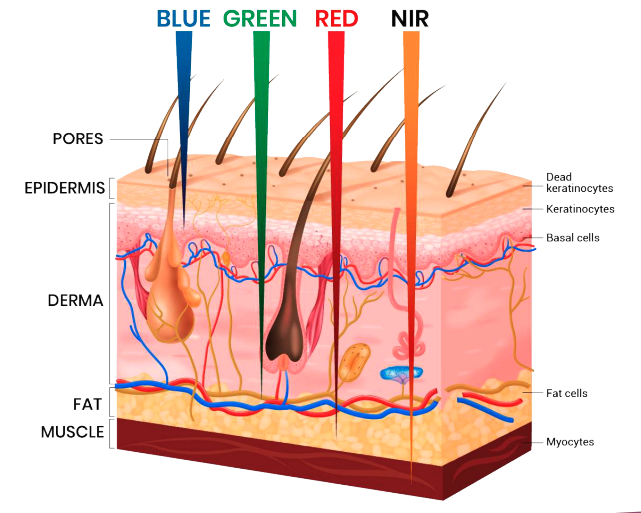
Relative Penetration of Different Wavelengths into the Skin
- The visible light you see (RED, GREEN, BLUE, and their combination PINK) works superficially, penetrating only a fraction of an inch into the skin and primarily affecting surface tissues.
-
In contrast, the infrared light frequencies you do not see (810, 850, and 940 nanometers) penetrate deeply into the body, reaching all tissues down to the bones.
-
Restore, Pulse, and Calm all include these invisible infrared frequencies. Cleanse focuses on the skin, utilizing blue light.
Backed by Science, loved by Hollywood
Discover what the world is saying about Red Light
Red Light Therapy
Restore + Pulse
Red and infrared light offer a wide range of application to help with inflammation, pain, recovery, anti-aging, and collagen stimulation, including a PULSED VERSION which is favored by athletes.
“InfraRed light (680–940nm) interact with your mitochondria, the powerhouses of your cells, to boost energy production up to 16 times”
Source: Gary Brecka
Human Biologist
Green Light Therapy
Calm
Green light may reduce the appearance of the dark spots while having a positive effect on migraines and light-sensitivity.
“Exposing migraine sufferers to a narrow band of green light significantly reduces photophobia and can reduce headache severity.”
Source: Harvard Medical School
on “Green Light for Migraine Relief”
Red & Blue Light Therapy
Cleanse
A combination of red and blue light to reduce bacteria and improve the appearance of the skin.
“Red LED light therapy may reduce inflammation and stimulate the production of collagen. Blue LED light therapy may destroy acne-causing bacteria (P. acnes)”
Source: Gary Brecka
Human Biologist
What our patients have to say about Sculptology!

Let’s make your treatment complete?
Red Light Therapy pairs very well with:
STILL NOT SURE? WE GOT YOU
frequently asked questions
What is red light therapy (RLT) or photobiomodulation (PBM)?
Red light therapy, also known as photobiomodulation, is a non-invasive treatment that utilizes specific wavelengths of red and near-infrared light to stimulate cellular processes within the body. This therapeutic technique promotes healing, reduces inflammation, and enhances overall cellular function.
How does red light therapy work?
Red light therapy works by delivering low-level wavelengths of light to the skin and underlying tissues. These light photons are absorbed by cells, particularly mitochondria (the cell’s energy generators), which then leads to increased ATP (adenosine triphosphate) production. This boost in cellular energy stimulates various biological processes, including collagen synthesis, tissue repair, and inflammation reduction.
What does Red Light do?
Red light therapy is FDA-approved for treating injuries, reducing pain, relaxing muscles and joints, and increasing blood circulation. These are the primary recognized applications in the United States. In recent years, extensive research has revealed additional potential uses, such as skin rejuvenation, hair loss prevention, and optimizing sleep quality.
What does Green Light do?
Green light is renowned for its calming effect on the mind compared to other colors within the visible light spectrum. According to a Harvard study, exposure to green light has been linked to a reduction in migraines. In contrast, blue and red light tend to have an activating effect on the body, whereas green light achieves the opposite, promoting a sense of relaxation.
Green light not only induces a calming sensation but also offers potential benefits for various skin concerns. It may help improve the appearance of dilated capillaries, sagging skin around the eyes, under-eye circles, hyperpigmentation, and sunspots.
Research indicates that the deep-penetrating near-infrared light energy can contribute to reducing hyperpigmentation by regulating hyperactive melanocytes in the dermis. Furthermore, studies suggest that green light may inhibit the excess production of melanin, leading to reduced pigmentation on the skin’s surface and a brighter, more even skin tone over time.
What does Red and Blue (Pink) Light do?
Red light therapy, also known as photobiomodulation, is a non-invasive treatment that utilizes specific wavelengths of red and near-infrared light to stimulate cellular processes within the body. This therapeutic technique promotes healing, reduces inflammation, and enhances overall cellular function.
Is red light therapy safe?
Yes!, red light therapy is generally considered safe when used properly. It does not contain UV rays and is non-thermal, meaning it does not heat the body’s tissues. However, eye protection should be worn to shield from the bright light, and individuals with certain medical conditions or photosensitivity should consult with a healthcare provider before undergoing treatment.
Who Should avoid using Light Therapy?
Pregnant women, individuals with cardiac pacemakers, and patients with malignant tumors. Individuals who are allergic to light therapy or who take photosensitizers (such as chlorpromazine). Individuals with severe heart and kidney disease, such as heart failure, myocarditis, uremia, etc. Individuals with skin diseases should use it under the guidance of a doctor.