You’ve done the research. You’ve seen the before-and-after photos. Now you’re asking the question that actually matters: is CoolSculpting candidacy something that applies to you?
The honest answer depends on biology, not marketing. After 25,000+ procedures at Sculptology, we’ve learned that candidacy screening is the single most important factor in patient satisfaction. Half the people who inquire about CoolSculpting aren’t ideal candidates, and the ones who get treated anyway are the ones who leave negative reviews. This guide exists so you can self-screen before you book, saving your time and ours while setting realistic expectations for what’s possible.
The Biology That Won’t Budge
CoolSculpting exists because of a biological reality that frustrates millions of people: certain fat deposits are structurally resistant to diet and exercise. This isn’t a willpower failure. It’s physiology anatomy.
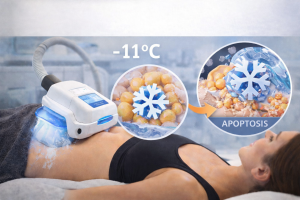
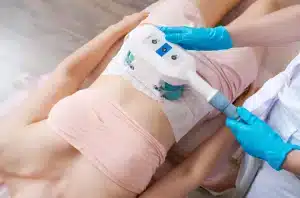
Fat cells in specific locations, including the lower abdomen, flanks, and inner thighs, have high concentrations of alpha-2 adrenergic receptors. These receptors act as a chemical lock, preventing fat from being released for energy regardless of how many miles you run or calories you cut. As the FDA notes in its clearance documentation, cryolipolysis bypasses this receptor lock by targeting fat cells directly through controlled cooling at approximately −11°C. The technology triggers apoptosis, a gradual process of programmed cell death, in the fat layer while leaving surrounding tissue unaffected.
Understanding this mechanism matters for CoolSculpting candidacy because it defines who the treatment is actually designed to help. CoolSculpting treats localized subcutaneous fat, the soft, pinchable layer just beneath your skin. It does not treat visceral fat, the internal fat surrounding organs that requires metabolic intervention. If your concern is overall weight rather than specific stubborn areas, you’re not a candidate for body contouring.
The Ideal CoolSculpting Candidate
The best CoolSculpting results happen when the patient profile matches what the technology is engineered to address. According to professional guidelines from the American Society for Dermatologic Surgery, ideal candidates share several characteristics that predict successful outcomes.
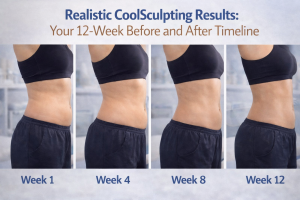
You’re likely a good candidate if you’re within 20 pounds of your ideal body weight and frustrated by localized fat deposits that don’t respond to your current fitness routine. The target isn’t weight loss. It’s contour change, and that distinction matters for setting expectations. You should have good skin elasticity in your treatment areas, which allows your skin to adapt as the fat layer reduces over the 8 to 12 week clearance period. You should also have realistic expectations: CoolSculpting delivers 20 to 25% fat layer reduction per treatment cycle, not dramatic overnight transformation.
Who sees the best results? The profiles vary, but patterns emerge. Some patients are fitness-focused individuals who maintain healthy habits but can’t eliminate specific problem areas no matter how targeted their workouts get. Others are women seeking to address post-pregnancy body changes that diet and exercise can’t fully reverse, because pregnancy structurally alters fat distribution in ways that systemic effort cannot undo. Executives and busy professionals appreciate that treatments fit into a lunch break and require zero downtime.
Who Isn’t a Good CoolSculpting Candidate
Candidacy isn’t universal, and a good provider will tell you that before taking your money. Several factors may disqualify you from treatment or indicate that you should pursue other options first.
BMI above 30 often correlates with visceral fat dominance rather than isolated subcutaneous deposits. If your concern is overall abdominal volume rather than a pinchable fat layer, you may need to address metabolic factors before body contouring makes sense. Moderate to severe skin laxity presents another consideration: fat reduction without skin tightening can trade one cosmetic concern for another, which is why the Mayo Clinic recommends discussing skin quality during any body contouring consultation. Pregnancy, nursing, and known cold sensitivity conditions like Raynaud’s Disease are absolute contraindications. The Bio-Aesthetic Analysis screens for all of these factors during your complimentary consultation.
| UNIQUE SCULPTOLOGY INSIGHTWhy the Consultation Comes Before the MachineMost providers start with applicator placement, treating the consultation as a sales step rather than a clinical assessment. *What we’ve found across 25,000+ procedures is that the Bio-Aesthetic Analysis is the gatekeeper variable, and patients who pass that assessment have dramatically different satisfaction rates than those who were treated without proper screening.* |
The Pinch Test: Your First Self-Assessment
Before you book a consultation, you can perform a basic candidacy screen at home. This is a starting point, not a diagnosis, but it gives you a sense of whether your concern matches what CoolSculpting treats.
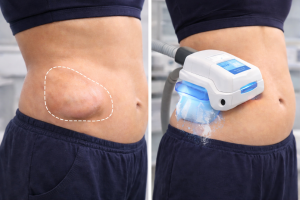
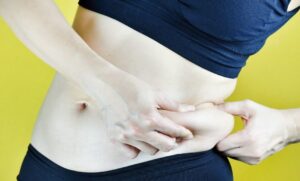
Stand in front of a mirror and locate your problem area. Using your thumb and forefinger, pinch the tissue. If you can pinch at least one inch of soft, pliable fat between your fingers, you likely have subcutaneous fat that may respond to cryolipolysis. If the area feels firm, doesn’t pinch easily, or sits deep beneath muscle, you may be dealing with visceral fat or a structural issue that CoolSculpting cannot address.
The pinch test tells you whether CoolSculpting candidacy is worth exploring. It doesn’t tell you how many cycles you’d need, whether skin laxity would affect your results, or whether other factors in your medical history matter. That’s what the clinical assessment is for.
What Happens at Your Consultation
Sculptology offers complimentary consultations that prioritize candidacy over sales. When you arrive, you won’t be pressured into same-day treatment. The consultation exists to determine whether you’re a candidate, not to close a transaction.
The process begins with the Bio-Aesthetic Analysis, a structured assessment that includes a tissue laxity test to evaluate skin quality, a pinch metric measurement to quantify subcutaneous fat volume, a diastasis recti screen for abdominal patients, and a complete medical history review. Your provider will take standardized baseline photographs using the Clinical 8 protocol, which documents your starting point under controlled lighting conditions.
If you’re a good candidate, your provider will explain what results you can realistically expect, how many treatment cycles your goals require, and what the timeline looks like. If you’re not a candidate, you’ll hear that directly, with recommendations for what might help you reach your goals before body contouring becomes appropriate. There’s a reason we screen before we treat: it protects your investment and our reputation.
Frequently Asked Questions
What BMI is required for CoolSculpting?
CoolSculpting works best for patients within 20 pounds of their ideal body weight. BMI alone doesn’t determine candidacy because subcutaneous fat distribution matters more than the number on the scale. The Bio-Aesthetic Analysis assesses your specific fat composition during a complimentary consultation.
How do I know if my fat is subcutaneous or visceral?
Subcutaneous fat sits just beneath the skin and can be pinched between your fingers. Visceral fat surrounds internal organs and cannot be pinched. CoolSculpting treats only subcutaneous fat. If you can pinch at least an inch of soft tissue in your target area, you likely have treatable subcutaneous fat.
Can I get CoolSculpting if I have loose skin?
Moderate to severe skin laxity may affect your results. CoolSculpting reduces fat volume but does not tighten skin. During your consultation, the tissue laxity test determines whether fat reduction alone will produce the contour change you want, or whether skin restoration should be part of your plan.
Is CoolSculpting safe for everyone?
CoolSculpting is FDA-cleared for 9 body areas and has one of the lowest side effect profiles in non-invasive body contouring. However, patients with cold sensitivity conditions like Raynaud’s Disease are not candidates. The Bio-Aesthetic Analysis screens for all contraindications before any treatment recommendation.
What happens during a CoolSculpting consultation?
Your complimentary consultation includes the Bio-Aesthetic Analysis : a tissue laxity test, pinch metric assessment, diastasis recti screen, and medical history review. You’ll receive honest feedback on whether you’re a candidate before any treatment planning begins.
Related Reading
CoolSculpting Elite Lafayette: Premium Fat Freezing
The comprehensive guide to CoolSculpting Elite at Sculptology, covering the full S-Method™ transformation process and what sets our physician-supervised approach apart.
Realistic Results: Your 12-Week Before & After Timeline
Understand what to expect at each milestone as your body processes treated fat cells over the 8 to 12 week clearance period.